Editor gráfico de plantillas
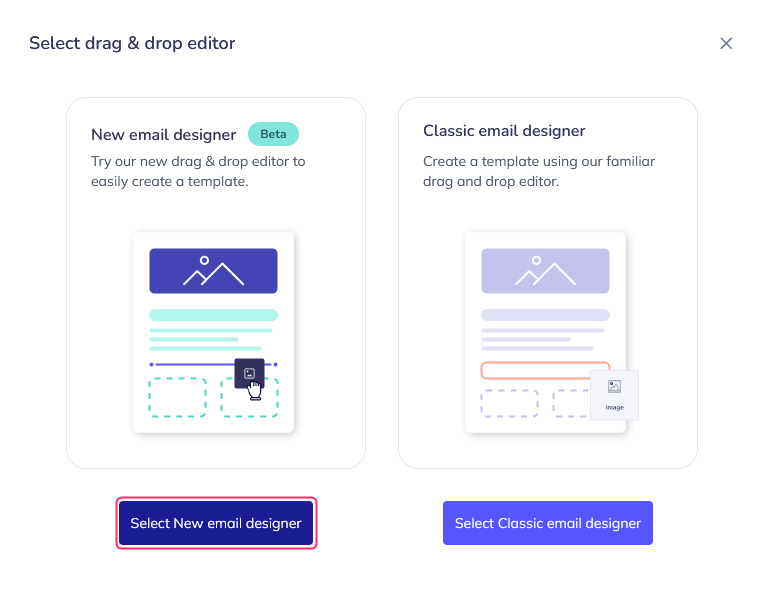
Al ingresar al Editor Gráfico de plantillas verás dos opciones.
Podrás elegir entre usar el nuevo editor o el editor clásico.
Recomendamos usar el nuevo editor.
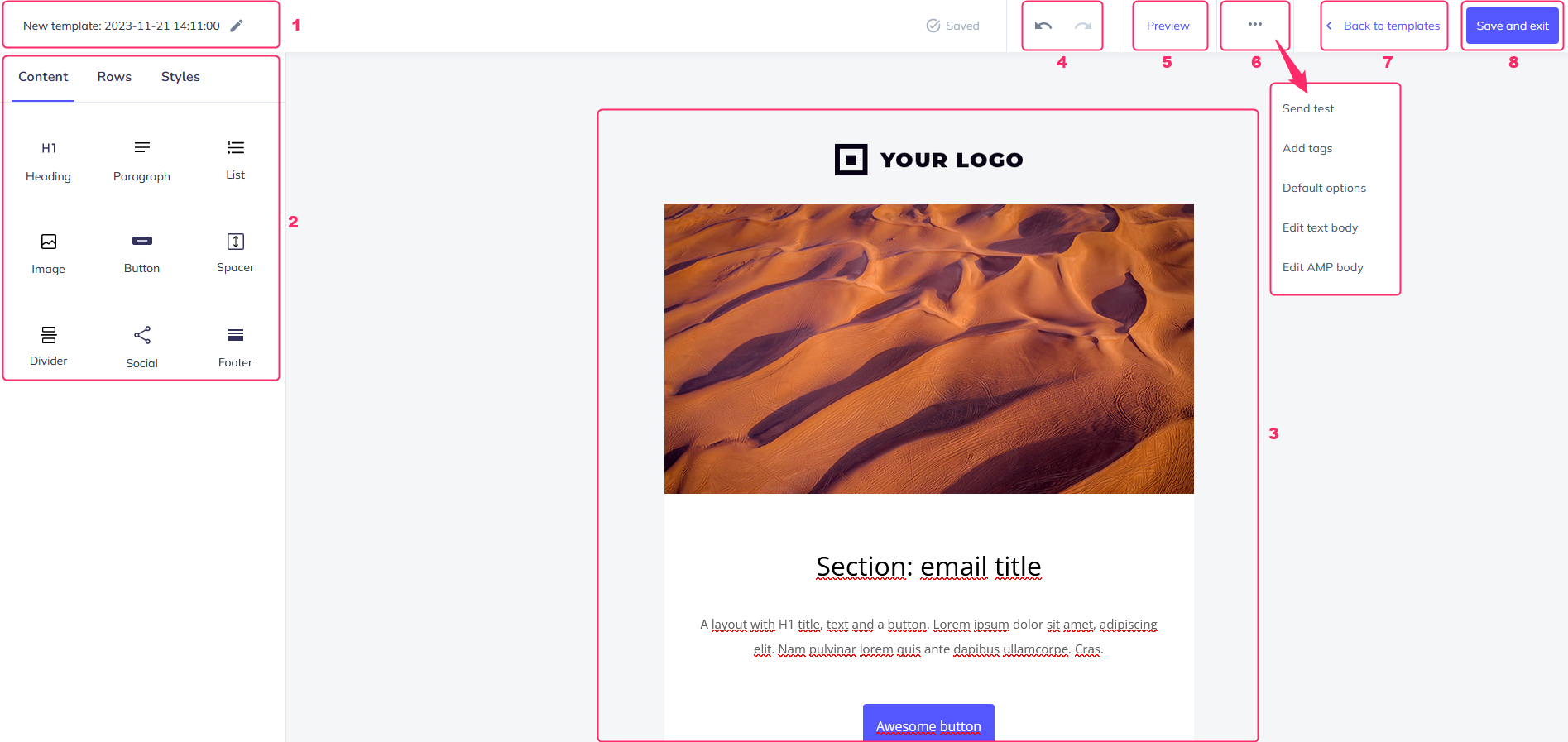
El editor de plantillas consta de las siguientes áreas:
- Nombre de la plantilla.
- Cuadro de objetos para diseñar tu plantilla.
- Modelo de tu plantilla creada.
- Botones para deshacer o rehacer un cambio.
- Preview mostrará una previsualización de la plantilla.
- El botón con tres puntos abrirá un menú con varias opciones:
- Send test: sirve para enviar una prueba con la plantilla en edición.
- Add tags: podrás agregar tags a la plantilla.
- Default options: podrás grabar un Remitente y Asunto por defecto para usar con esta plantilla.
- Edit text body: podrás crear un cuerpo de mensaje por defecto si no definís uno al usar esta plantilla en una campaña.
- Edit AMP body: podrás crear un AMP por defecto si no definís uno al usar esta plantilla en una campaña.
- Back to templates volverá al menú anterior, la edición de tu plantilla se grabará automáticamente.
- Con el botón Save and exit grabarás los cambios y saldrás a la pantalla anterior, donde verás todas tus plantillas.