# ¿Cómo instalar un Certificado SSL en Plesk?

Los certificados **SSL** son muy importantes en portales de compras online o que requieran encriptar información sensible que se transfiera entre el usuario y el sitio web.

También son importantes para evitar alertas de seguridad que puedan mostrar los navegadores.
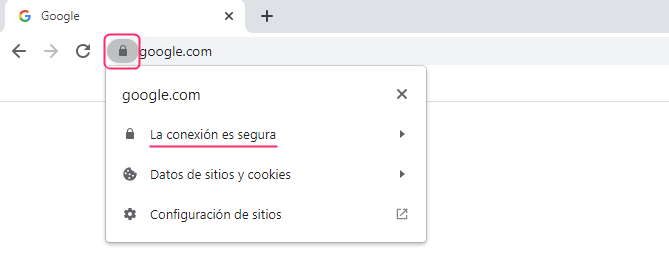
<div align="left"><figure><img src="/files/gDxWJPgsunSCrIVg9REW" alt=""><figcaption><p><strong>Sitio web cubierto con su certificado SSL</strong></p></figcaption></figure></div>

<div align="left"><figure><img src="/files/xhDQ1q1iBICQ0aJDqfb3" alt=""><figcaption><p><strong>Sitio web sin certificado SSL</strong></p></figcaption></figure></div>

Para instalar el certificado **SSL** en **Plesk** seguí estos pasos:

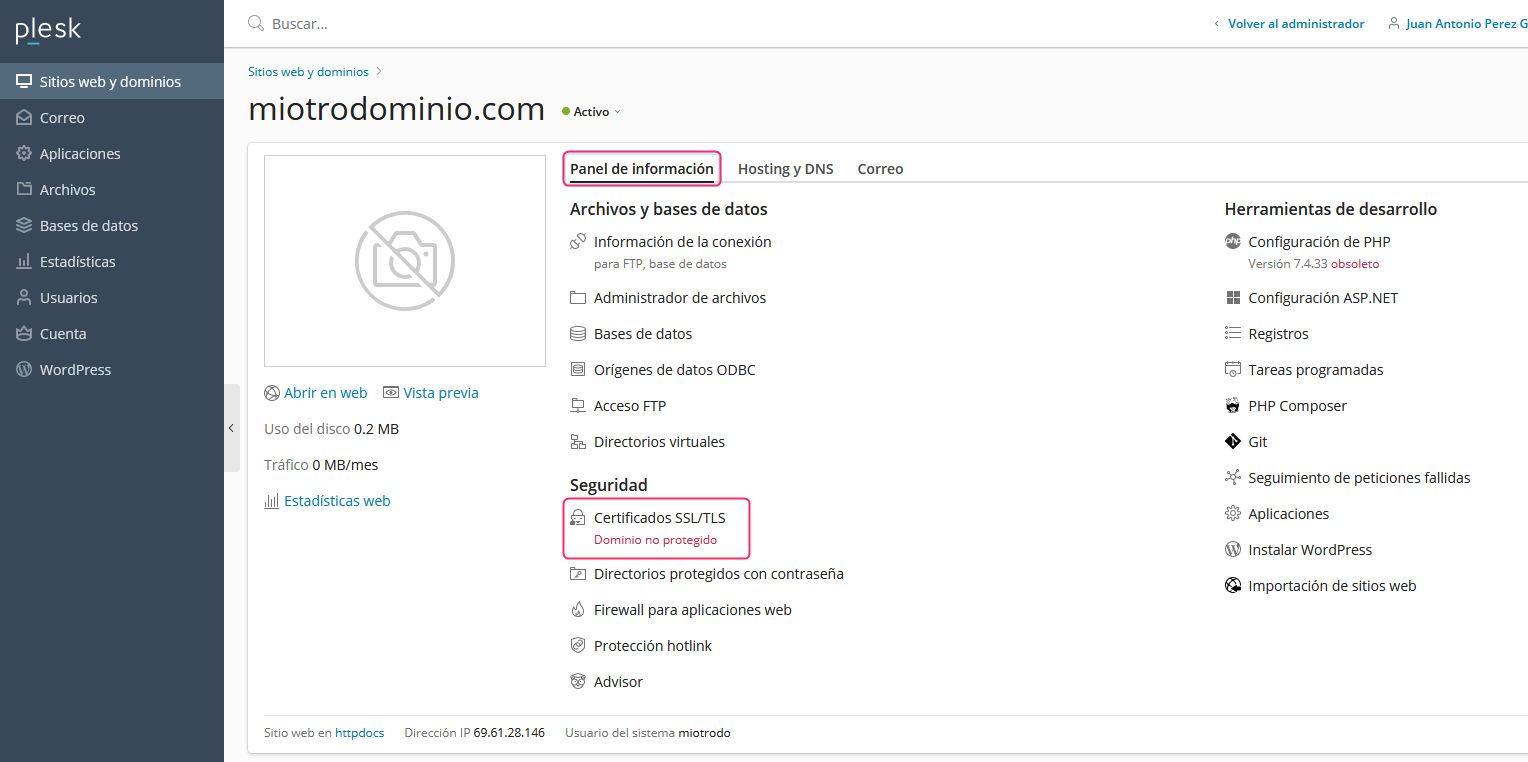
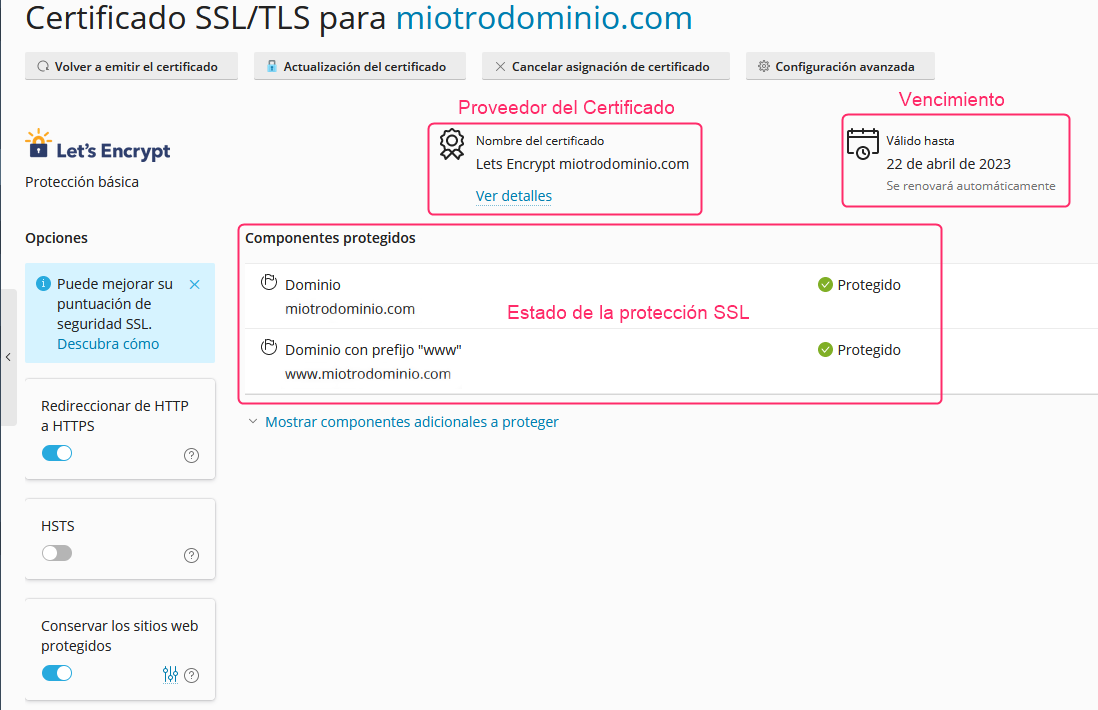
1. Primero, confirmá el estado actual de tu cobertura SSL. Desde la pestaña **Panel de información**, opción **Certificados SSL/TLS**. Ingresá para ver en más detalle el certificado SSL.
<figure><img src="/files/5KolWOOUDE3joDnHDLPp" alt=""><figcaption></figcaption></figure>

En la nueva pantalla verás el estado de tu cobertura en cada dominio y subdominio, el vencimiento del certificado y el proveedor del certificado SSL.
{% hint style="info" %}
No te preocupes por las renovaciones del certificado SSL. Se renovará automáticamente.
{% endhint %}

<figure><img src="/files/K5hQ3Kfr6ICZcQfNqmcr" alt=""><figcaption></figcaption></figure>

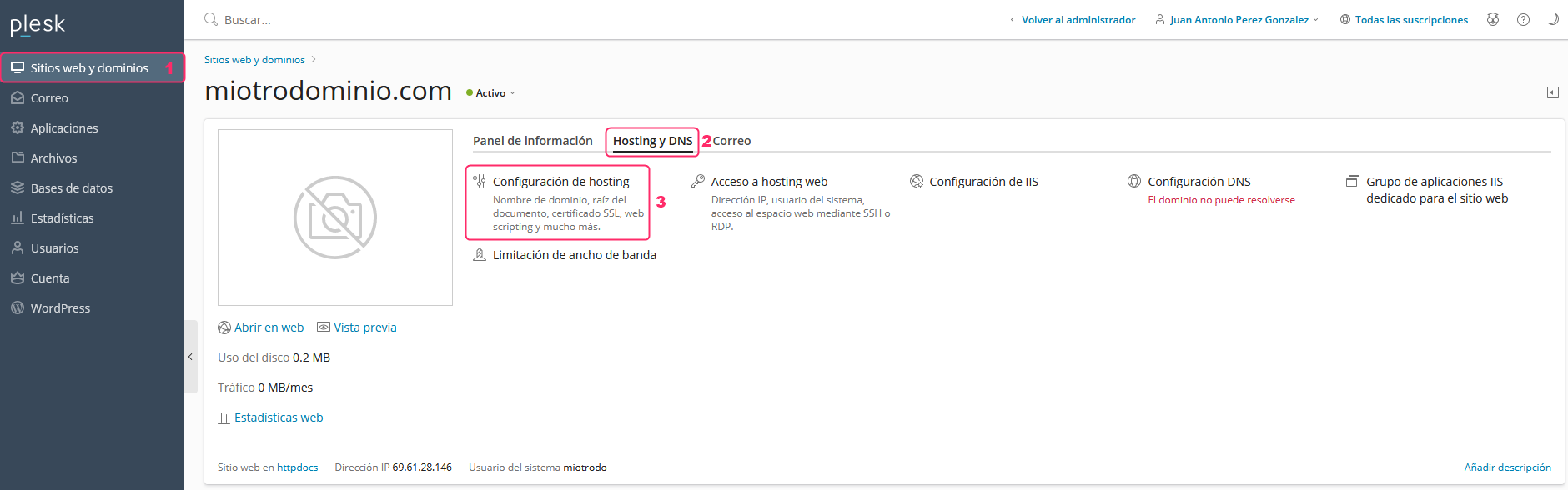
2. En caso de no tener instalado el certificado SSL volvé a la página principal del panel de control, desde **SItios web y dominios** del menú de la izquierda.

Luego hacé clic en la pestaña **Hosting y DNS** y luego ingresá a **Configuración de hosting**.

<figure><img src="/files/KTpA3GhIpdCA3PC9e9wT" alt=""><figcaption></figcaption></figure>

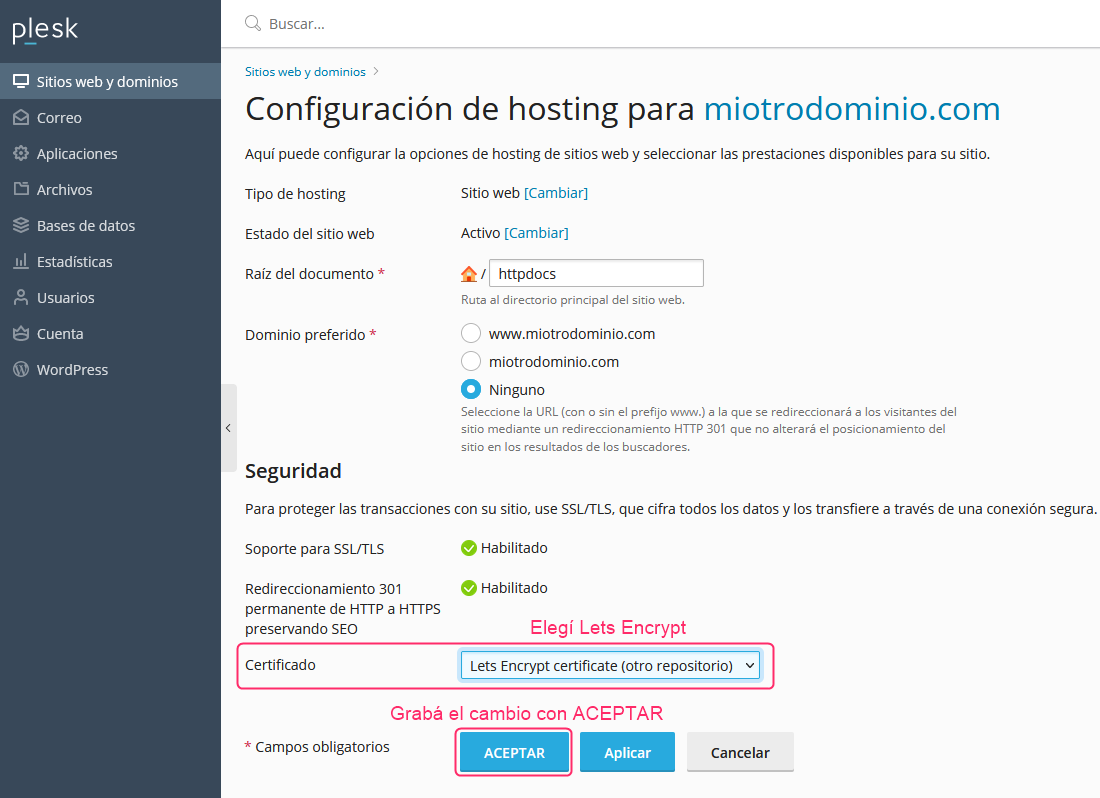
3. En la pantalla de configuración buscá el menú desplegable **Certificado** y elegí **Lets Encrypt**.

Luego, debajo de todo, grabá el cambio con el botón **ACEPTAR**.

<figure><img src="/files/hs1jmwz2aJHLd9XAgaEE" alt=""><figcaption></figcaption></figure>

Eso es todo, tu cuenta de hosting estará protegida por el certificado SSL.


---

# Agent Instructions: Querying This Documentation

If you need additional information that is not directly available in this page, you can query the documentation dynamically by asking a question.

Perform an HTTP GET request on the current page URL with the `ask` query parameter:

```
GET https://ayuda.sitioshispanos.com/menu-principal/guias/paneles-de-control/panel-de-control-plesk/certificados-ssl/certificado-ssl-en-plesk.md?ask=<question>
```

The question should be specific, self-contained, and written in natural language.
The response will contain a direct answer to the question and relevant excerpts and sources from the documentation.

Use this mechanism when the answer is not explicitly present in the current page, you need clarification or additional context, or you want to retrieve related documentation sections.