# ¿Donde ver los logs de errores de mi pagina web en Plesk?

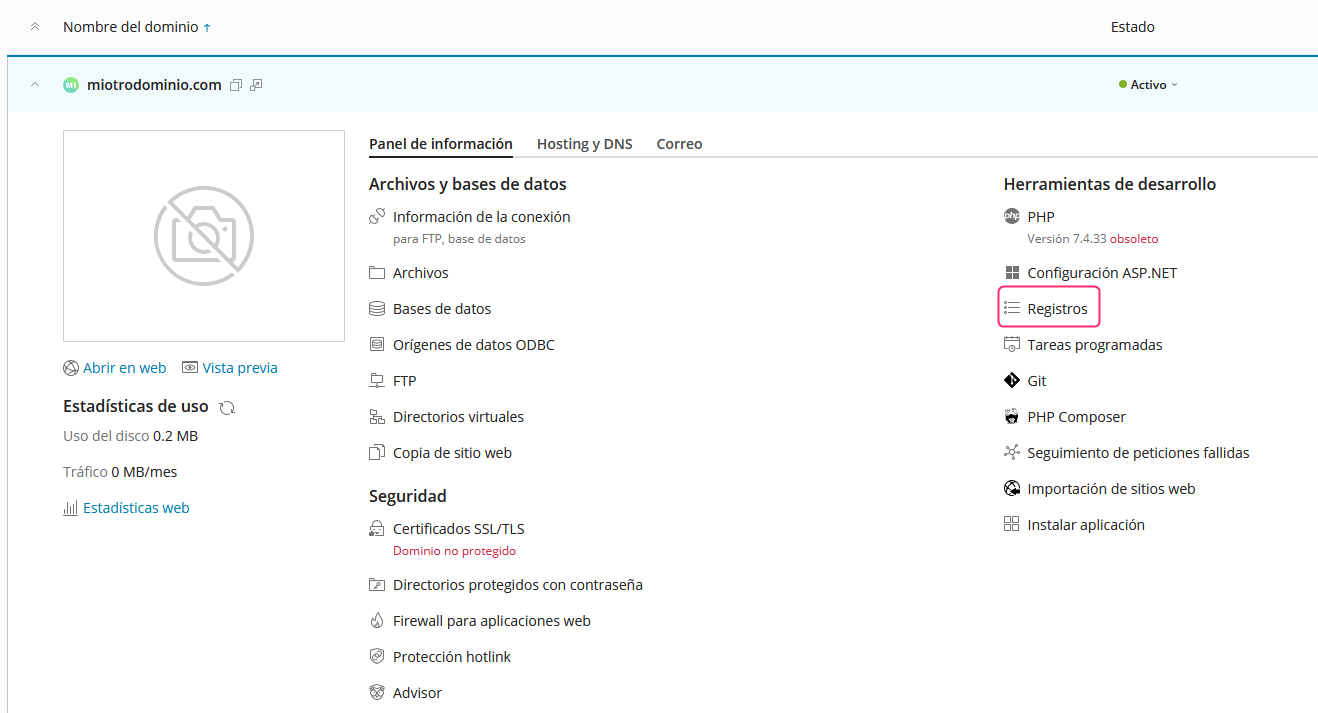
Para ver los logs de errores que pueda estar generando tu pagina web seguí estos pasos:

* Ingresá al panel de control de tu cuenta y, luego, en las opciones centrales, ingresá a **Registros**.

<figure><img src="/files/L4BnyWngpHjHdjZkSKJg" alt=""><figcaption></figcaption></figure>

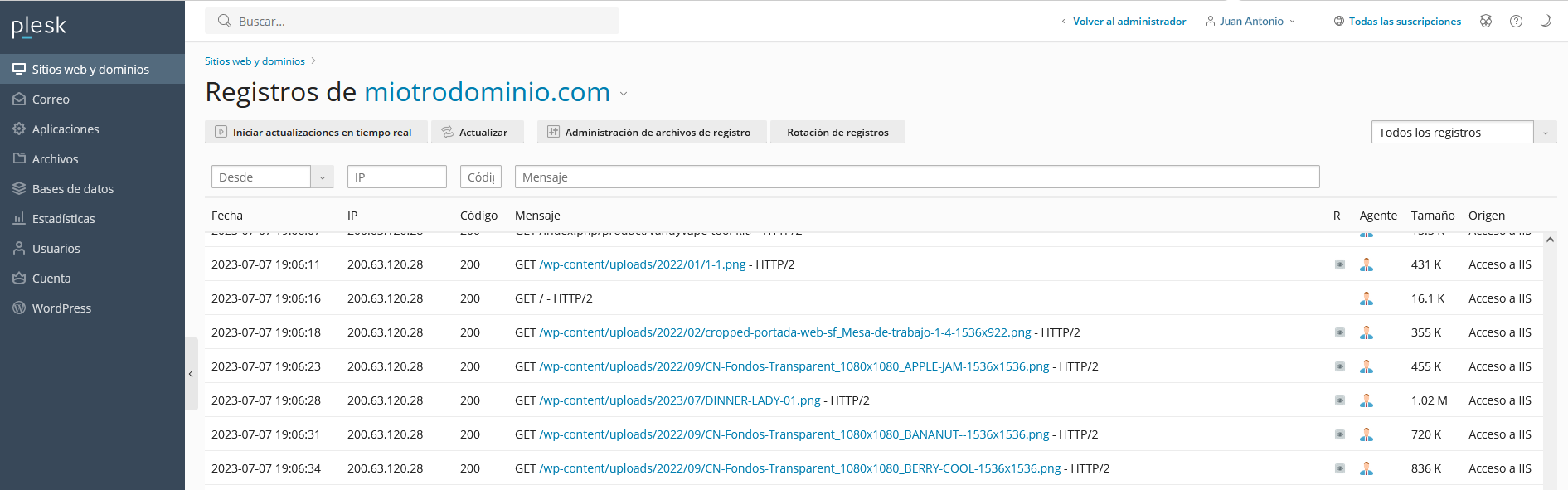
* Verás el contenido del log de errores.&#x20;

<figure><img src="/files/RYfSlCedtoF2cMHm71Ak" alt=""><figcaption></figcaption></figure>

#### También, podrás ver logs de errores PHP siguiendo estos pasos:

1. Ingresá al **Administrador de Archivos** desde la opción **Archivos**, del menú de la izquierda.
2. Luego, seguí la ruta de directorios Logs=>php\_errors=>tudominio.
3. Si tu sitio web utiliza PHP y generó errores los verás en el archivo dentro del directorio de tu dominio.
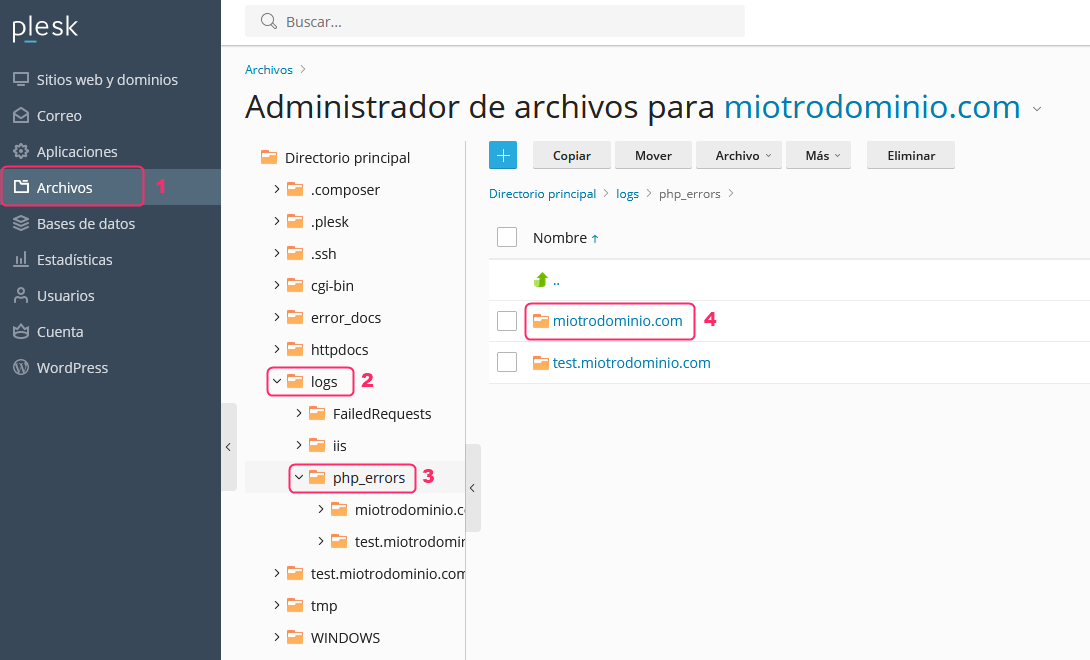
<figure><img src="/files/YECBtWNJNCWgwbe8P67s" alt=""><figcaption></figcaption></figure>


---

# Agent Instructions: Querying This Documentation

If you need additional information that is not directly available in this page, you can query the documentation dynamically by asking a question.

Perform an HTTP GET request on the current page URL with the `ask` query parameter:

```
GET https://ayuda.sitioshispanos.com/menu-principal/guias/paneles-de-control/panel-de-control-plesk/opciones-avanzadas-plesk/donde-ver-los-logs-de-errores-de-mi-pagina-web-en-plesk.md?ask=<question>
```

The question should be specific, self-contained, and written in natural language.
The response will contain a direct answer to the question and relevant excerpts and sources from the documentation.

Use this mechanism when the answer is not explicitly present in the current page, you need clarification or additional context, or you want to retrieve related documentation sections.